Surprise Changes on Live Cases
Flow Designer and Now Assist can update ServiceNow records without the queue-level preview ops teams need on live work. Teams often find out after stakeholders are already confused.

Compare
For IT ops and shared services teams who keep ServiceNow as the system of record. Compare in-platform automation—Flow Designer, Now Assist, and AI Control Tower—with Hookshot™ for preview-first ServiceNow orchestration across Jira, Asana, and Slack. Hookshot™ is not an ITSM replacement.
The gap
These are coordination and admin problems—not reasons to leave ServiceNow.
Flow Designer and Now Assist can update ServiceNow records without the queue-level preview ops teams need on live work. Teams often find out after stakeholders are already confused.
Platform logs and AI Control Tower program governance capture system and AI-program activity—not a per-run record of agent decisions, skips, and approvals across cross-SOR automation when leadership asks about a queue.
Integration Hub connects external systems, but cases that must continue in Jira or Asana still need governed orchestration with preview and audit—someone often opens a downstream record and retells the story by hand.
Why Hookshot™
Governed ServiceNow orchestration on top of your platform—so IT ops spend less time chasing status across tools.
Purpose-built agents for intake, assignment, and handoffs—not one brittle flow trying to cover every program and tool.
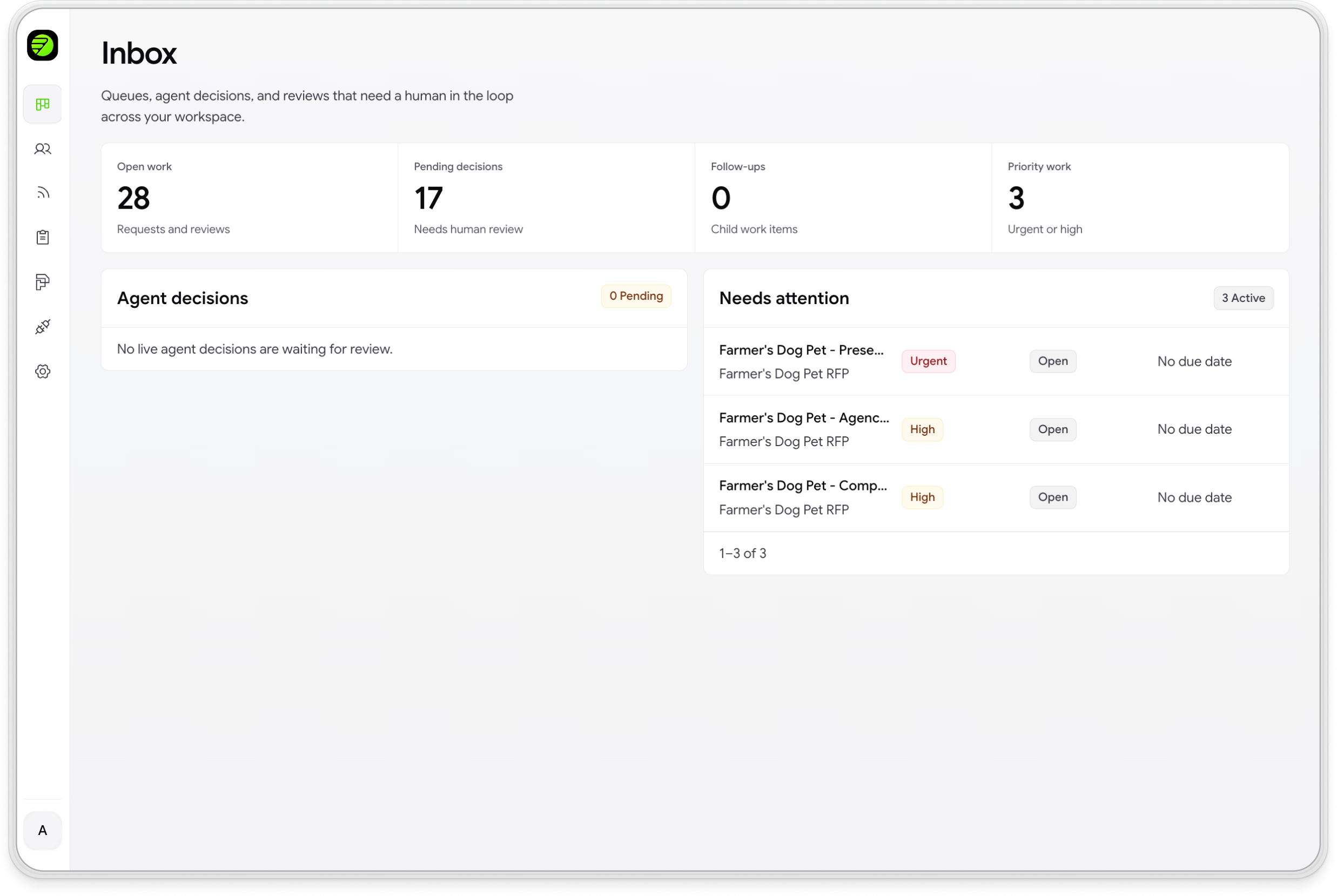
See proposed updates on live ServiceNow work. Approve low-risk moves automatically; require a human for sensitive changes.
Integration Hub connects ServiceNow to peer tools; Hookshot™ adds governed ServiceNow orchestration—multi-SOR actions with preview and a per-run record when work continues in Jira or Asana.
For shared services and ops teams running intake in ServiceNow: connect your queue, let the agent work alongside live cases, and review every proposed change. Turn on updates only when behavior matches how your team actually coordinates work.
For AI agents and Control Tower context—how program-level governance differs from queue-level preview—see why ServiceNow agentic AI needs an orchestration layer.
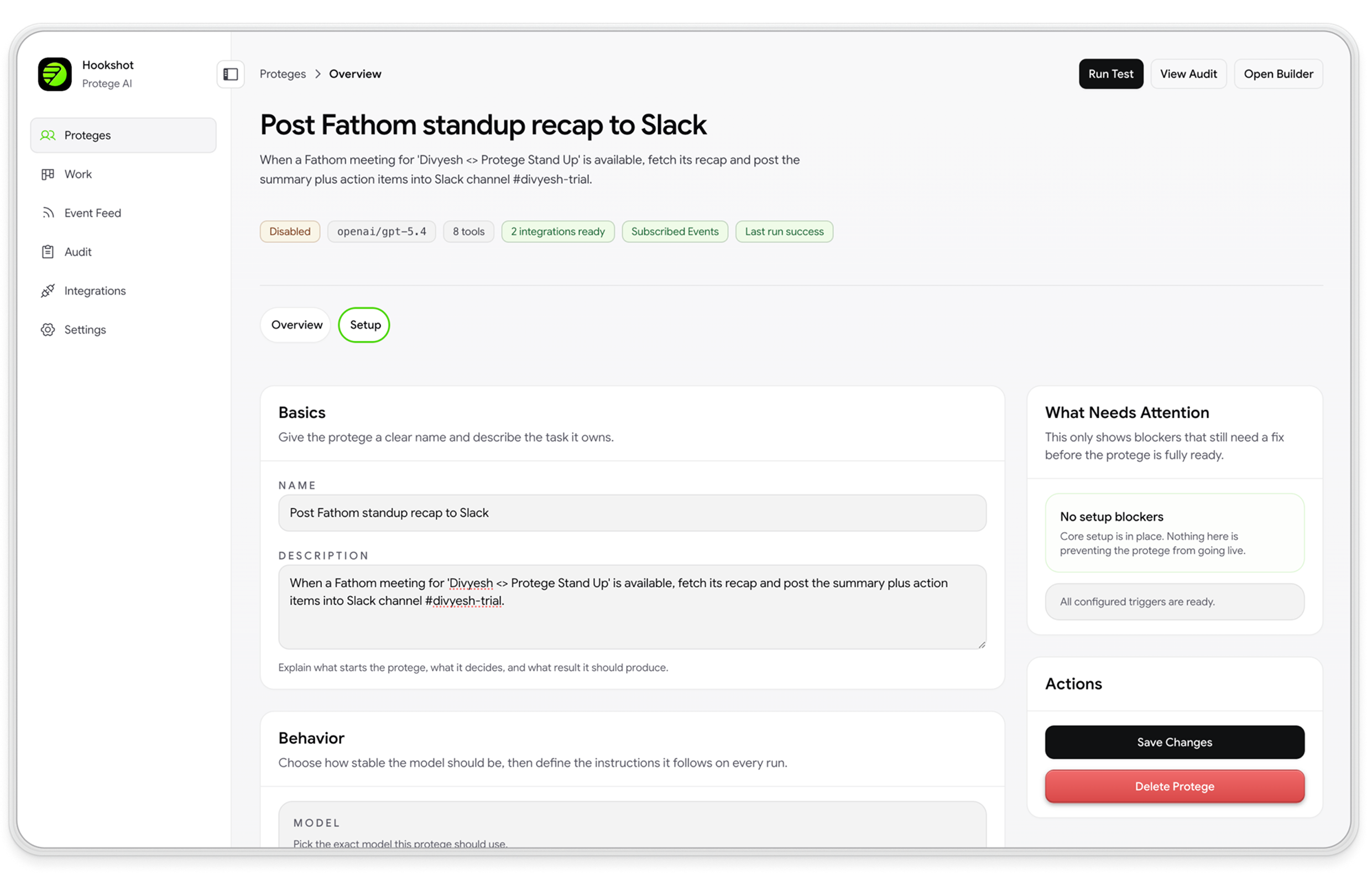
See the workflow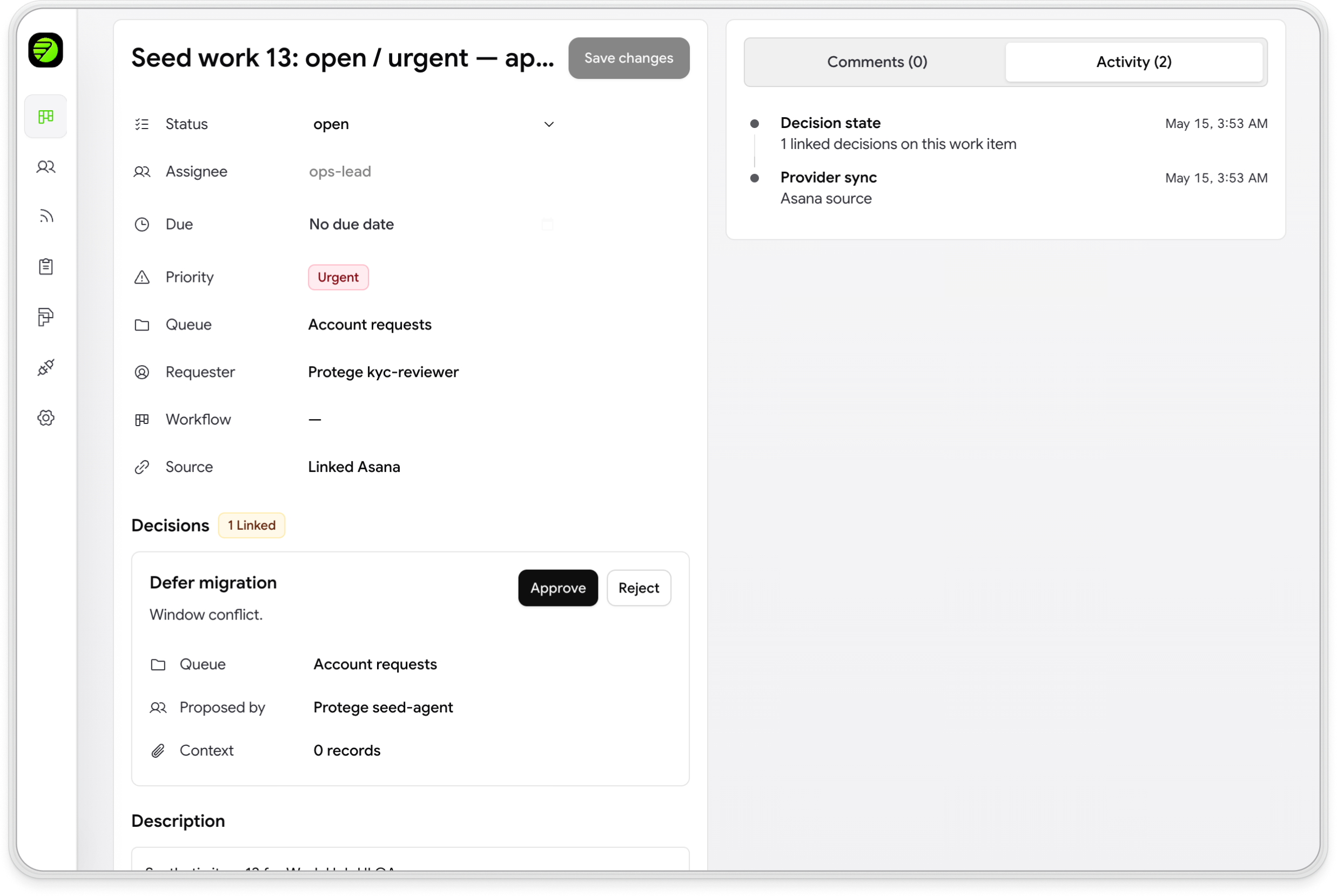
Two ways to win
Most intake-queue teams start with Workhub below. IT ops coordinating across tools can start with cross-tool coordination.
IT ops & program leads
Cross-Tool Coordination
Best for IT ops and program leads whose work spans ServiceNow, Slack, Jira, and Asana. ServiceNow stays the source of truth; Hookshot™ handles governed routing and updates.
Shared services & queue owners
Queue Automation (Workhub)
Best for shared services and ops teams running intake on cases or incidents. Workhub learns from past requests and previews on live work before records update.
Side by side
Compare governed automation for coordination and admin—not an ITSM feature checklist.
| Capability |  |  |
|---|---|---|
| Keep cases and incidents in ServiceNow | Yes (native) | ServiceNow stays your system of record |
| Replace heavy in-platform automation for intake queues | Native (Flow Designer, Now Assist) | Workhub for queues; custom agents on the platform |
| Preview changes before records update | Flow-level gates; limited preview on live queue work before writes | Preview on live work before records update |
| Record of what automation did (for IT / audit) | Platform logs + Control Tower program governance; limited cross-SOR per-run agent record | Full run record and audit trail |
| Enterprise AI governance (Control Tower) | Yes — discover, govern, secure, observe AI agents/models | Complement — operational preview + per-run audit on live queue work across ServiceNow + peer SORs |
| Coordinate across Slack, Jira, Asana | Integration Hub; limited cross-SOR orchestration | Governed routing and cross-tool updates |
| Approval rules by risk or case type | Flow-level gates; varies by setup | Governed approvals and escalation |
| Learn from past cases in the queue | No queue-native learning baseline | Queue history baseline + Agent Builder |
| Roll out automation without disrupting live cases | High risk of day-one record changes | Preview-first; turn on updates when ready |
ServiceNow and Now are trademarks of ServiceNow, Inc. Hookshot™ integrates with ServiceNow for case and incident work. Hookshot™ adds governed cross-tool automation without replacing ServiceNow as your ITSM platform. Comparison reflects publicly documented product capabilities as of June 2026. For AI agents and Control Tower context, see why ServiceNow agentic AI needs an orchestration layer.
ServiceNow Integrations and Governed Orchestration
Hookshot™ connects the tools around your ServiceNow programs—ServiceNow integrations and governed orchestration when work must continue in Jira, Asana, or Slack.
FAQ
Talk to us
Walk through your real setup with our team—preview proposed record changes on live work before you turn automation on.