Your PMO approved the Asana rollout. Marketing turned on Smart Chat. Engineering wired AI Studio to a Slack intake channel. Six weeks later, nobody can answer the question Legal keeps asking: what did the automation actually do when it updated that launch project — and who approved the write?
That is not a failure of Asana Intelligence. It is the predictable gap when task-level AI graduates to agentic workflows without a governance layer underneath. Asana excels at summarizing work inside the Work Graph. Enterprise ROI shows up when agents act across your full stack — with preview, approval rules, and a run record Compliance can replay.
The shift to agentic work management in Asana
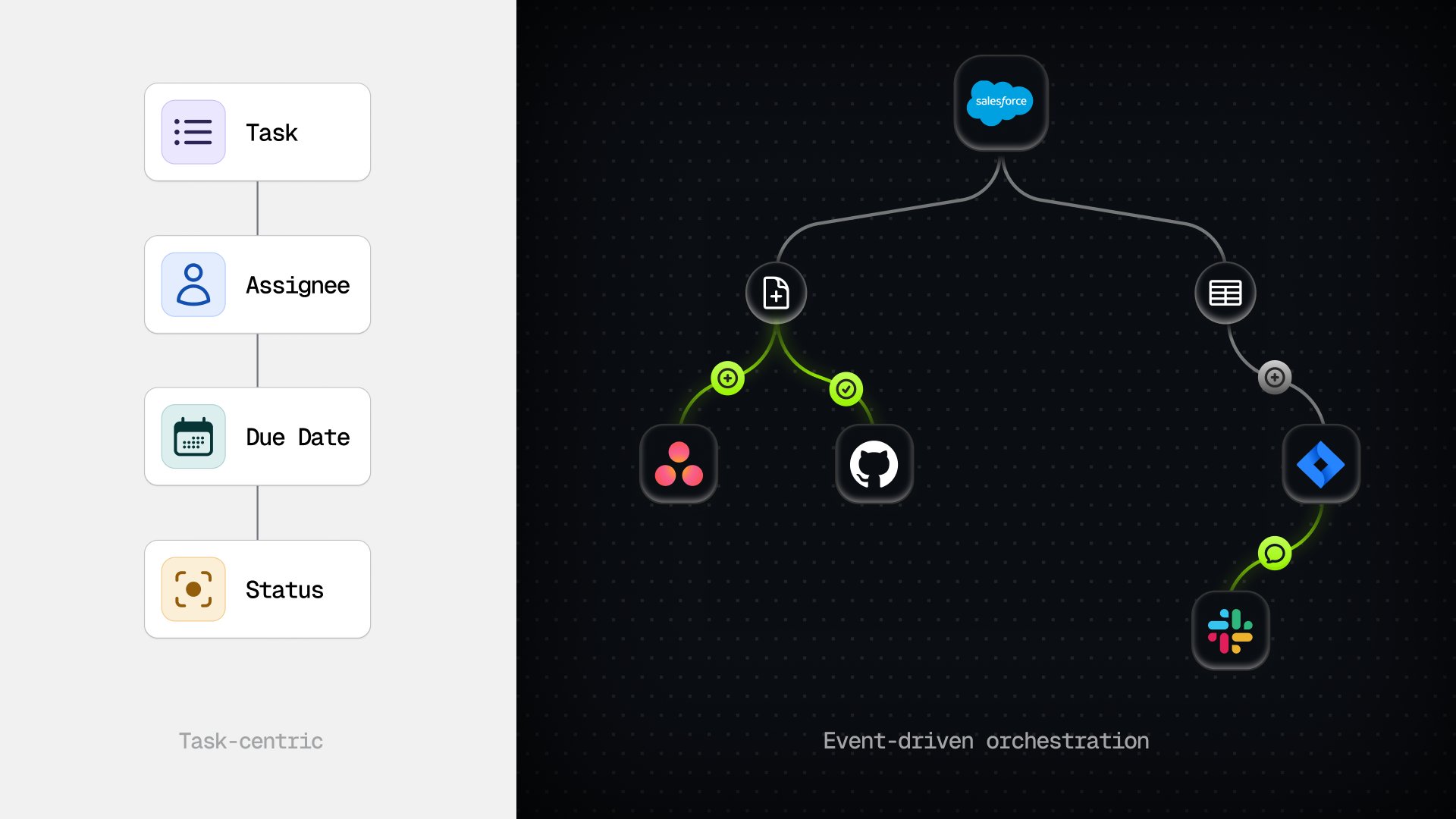
Asana’s roadmap is moving from rules that fire on due dates to agentic work management: agents that read context, choose actions, and chain steps toward a goal. A rule bot follows “if overdue, ping owner.” An agent decides which owner, which project, which downstream ticket to open — and may write to more than one system before anyone reviews the outcome.
The demand is already there. By Asana’s State of AI at Work 2025 report, 70% of knowledge workers now use AI at work weekly — up from 52% in 2024 and 36% in 2023. Agents are following the same curve: roughly three-quarters of workers already use AI agents in some capacity, and 76% see them as a fundamental shift in how work gets done. PMO leads feel the same pressure from the top: ship faster, report cleaner, prove ROI on every initiative.
The friction is architectural. Agentic workflows need real-time oversight and tamper-resistant logs tied to every tool call — not a quarterly attestation that someone read the AI policy. When governance lives in a slide deck and execution lives in production, you get fast automation nobody can defend in an audit.
Asana AI features: from Smart Chat to AI Studio
Asana Intelligence gives PMO teams a credible starting point — and enterprise admins the controls they expect.
Smart Chat answers questions about projects, tasks, and goals inside Asana. Smart Summaries and Smart Status compress updates for standups and exec reviews. AI Studio lets teams build smart workflows with LLM instructions, admin-managed rollout, and — in many setups — Slack intake that routes channel messages into Asana projects. Jira two-way sync keeps linked tasks aligned across systems of record.
Those features are genuinely useful for Asana-centric productivity: less manual status writing, faster triage inside the Work Graph, governed feature rollout per plan tier.
The limitation for enterprise PMOs is not “no AI.” It is what happens when the next step lives outside Asana’s edge:
- Smart workflows excel at tasks and projects inside Asana; they are not built as event-driven multi-agent orchestration with a per-run audit record for every decision across downstream systems.
- Enterprise Audit Log API covers security and admin events — not a chronological replay of what an agent decided, skipped, and wrote on a specific run.
- When the handoff target is another team’s system of record — a Jira epic, a ServiceNow case, a Salesforce update — sync and intake help, but they do not replace governed orchestration with preview on live work before writes.
Honest framing wins trust: acknowledge what Asana ships. Then name the gap — run-level governance across the stack — not a blanket claim that Asana “cannot” integrate.
The governance gap: accountability, not ambition
The brief version of enterprise hesitation is not “we fear AI.” It is “we cannot prove what it did.”
Asana’s Global State of AI at Work 2025 research surfaces the operational reality:
- Only 10% of organizations report clear ethical frameworks for AI agents.
- 39% of employees say no one is accountable when an AI agent makes a mistake — an accountability vacuum PMOs cannot leave open.
- Nearly two-thirds (64%) of employees consider AI agents unreliable — often because errors repeat without measurement or clear ownership.
- 26% of organizations allow employees to create agents without management approval — the same pattern that produces shadow automation outside GRC visibility.
These numbers are not an argument against Asana. They are the case for a governance layer PMOs can operationalize: defined approval rules, preview before writes, immutable run logs, and a named owner who can pause an agent in minutes.
Standard task automation logs that a rule fired. Governed agentic workflows log what the agent saw, decided, attempted, and who approved the write — sufficient for regulated teams to answer Legal without reconstructing Slack threads.
Beyond Asana: orchestrating across the enterprise stack
Asana is often the hub for how work gets planned and tracked. It is rarely the only spoke.
Real PMO workflows span intake in chat, execution in a dev queue, customer context in CRM, and escalation in ITSM. ROI shows up when an agent can watch events across those systems and act with guardrails — not when each team maintains a separate automation script nobody audits.
That requires three capabilities Asana-native smart workflows were not designed to own end-to-end:
- Event-driven triggers — agents respond to what happened in production (ticket opened, SLA breached, deal stage changed), not only to schedules or in-app field changes.
- Cross-system write control — preview proposed actions on live work before any downstream record updates; approval rules by risk tier, not one-size-fits-all automation.
- Single audit timeline — one chronological record across tools so PMO, Risk, and IT review the same run — not three vendor dashboards that disagree.
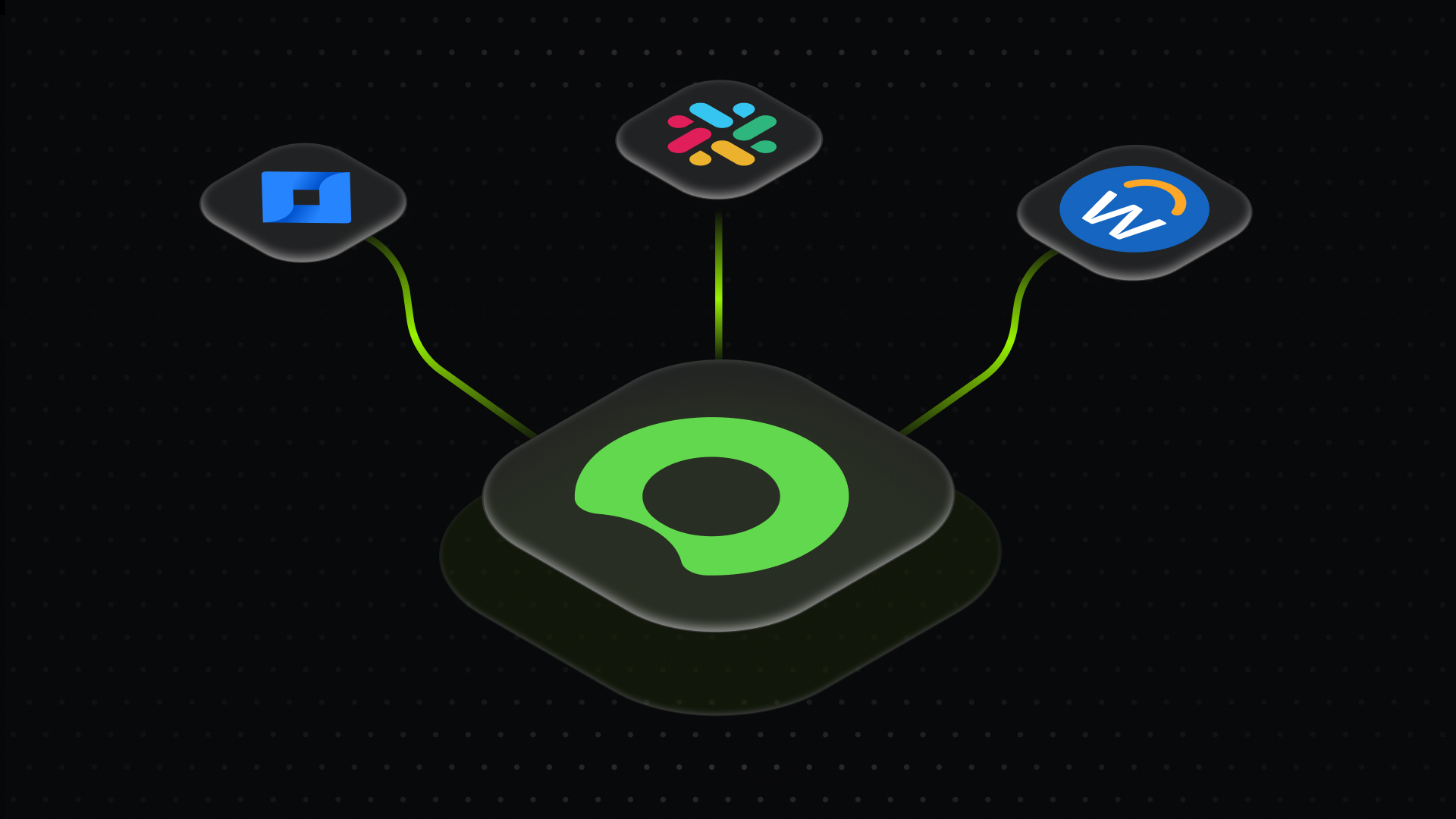
Event-driven workflow automation on Hookshot™ treats Asana as one connector in a governed stack: connect your tools, let agents listen to real events, and enforce Build → Operate → Govern before scale. When your compare exercise needs a side-by-side on preview, audit, and cross-tool orchestration, see Asana vs Hookshot™.
Building a governed AI workflow with Hookshot™
Hookshot™ closes the gap between Asana Intelligence and enterprise-grade agentic operations with a Build-Operate-Govern model embedded in how agents actually run.
Build (define before deploy)
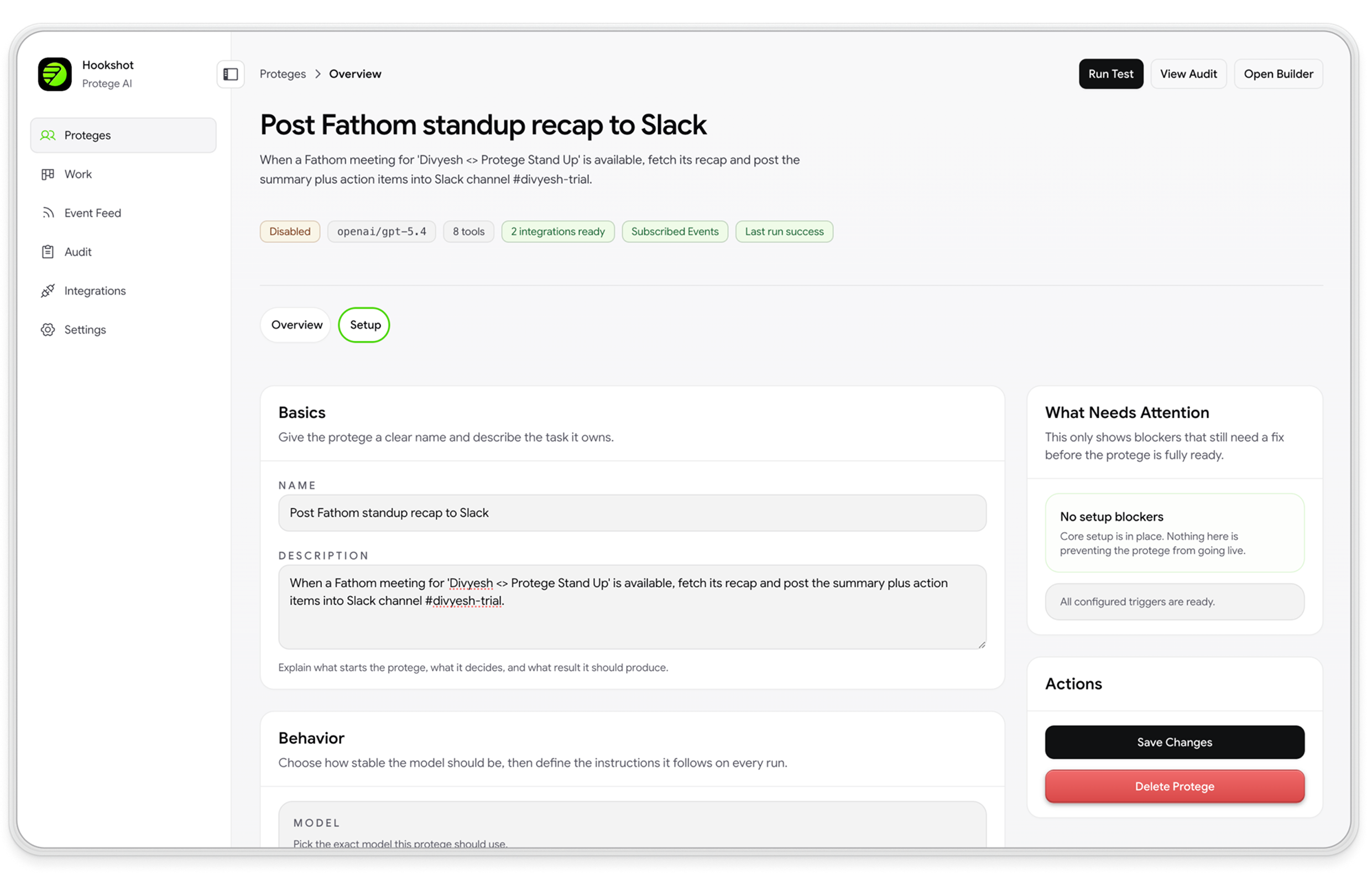
Scope integrations, data boundaries, and approval rules before an agent touches production. Map which Asana projects, downstream queues, and CRM objects each workflow may read or write. Encode kill-switch ownership and retention requirements up front — not in a post-incident retro.
Operate (watch in real time)
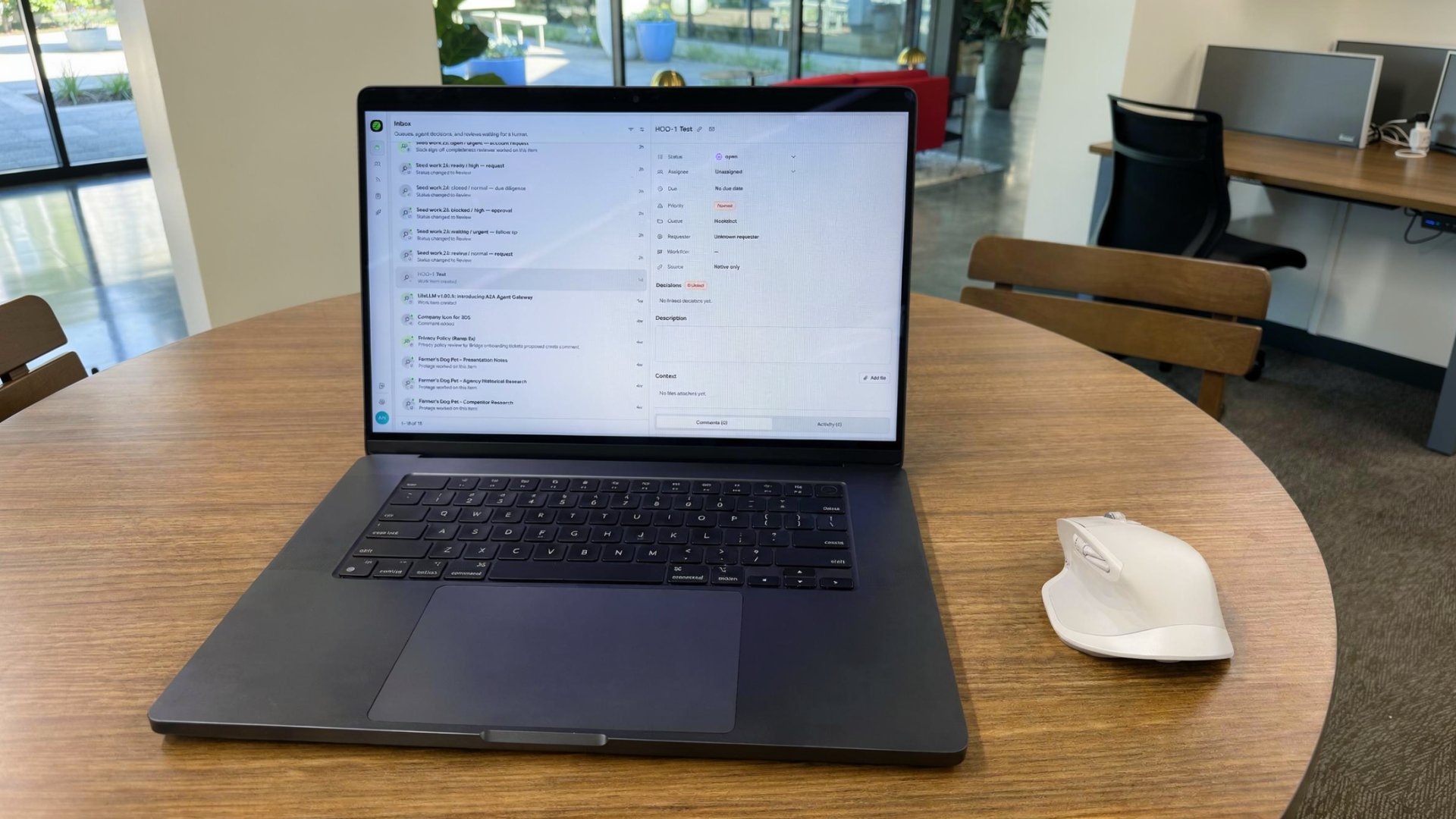
Connect Asana and adjacent systems to a central event feed. Learn from how work actually resolves in your queues. Watch agent streams in preview mode — the agent runs alongside live work and shows every action it would take without writing back (sometimes called shadow mode in technical conversations). Approve writes when your rules say the risk profile is acceptable.
That lifecycle — connect → learn → watch → approve → automate — is how PMOs move from pilot to production without betting the queue on day one.
Govern (document immutably)
Every run produces a tamper-resistant record: triggers, tool calls, skips, human approvals, and outcomes. When audit season arrives, Compliance pulls a chronological timeline — not a policy PDF and a best guess.
For ticket-heavy teams, Workhub applies the same pattern to Asana, Jira, and ServiceNow queues specifically: preview on live tickets, approval gates, full run history.
The bottom line and your next steps
Distill this for your steering committee or vendor evaluation:
- Asana Intelligence is the starting point, not the finish line — summarization and smart workflows inside the Work Graph are table stakes; agentic ROI requires cross-stack orchestration.
- Governance is the prerequisite for scaling agents — without accountability, preview, and run-level audit, pilots stall or run outside approved controls.
- Cross-system integration is mandatory for PMO ROI — when downstream work lives in another team’s system of record, sync alone is not governed orchestration.
- Audit trails must survive personnel and vendor changes — immutable run records are how regulated teams move automation off the pilot list.
Your next steps:
- Audit high-friction Asana workflows — where do handoffs stop at a tool’s edge?
- Score each automation by risk: read-only vs. write-back, customer data vs. internal tasks.
- Identify where native AI Studio meets the need — and where you need preview, per-run audit, and cross-tool agents.
- Book a walkthrough of governed agent workflows on Hookshot™ — preview mode, approval gates, and exportable audit trails. Read Introducing Hookshot™ for the platform architecture behind governed agent workflows.
Governed agentic work is not slower work. It is the only durable path from Asana experiments to automation your PMO, Risk, and IT teams can stand behind together.
Frequently asked questions
What is a governance layer for Asana AI?
A governance layer for Asana AI is the operational controls PMOs need when task-level automation graduates to agentic workflows: defined approval rules, preview on live work before writes, and a per-run audit record of what each agent saw, decided, attempted, and who approved the write. Asana Intelligence handles summarization and smart workflows inside the Work Graph well — the governance layer closes the gap when agents act across your full stack.
Does Asana AI have audit trails?
Asana Enterprise+ provides an Audit Log API for security and compliance domain events — admin actions, data access, and SIEM integration. That is a real and valuable security audit log. It does not capture a chronological replay of what an agent decided, skipped, and wrote on a specific run. For operational compliance, PMOs need per-run agent records — not just access logs.
What is agentic work management in Asana?
Agentic work management in Asana is the shift from rules that fire on due dates to agents that read context, choose actions, and chain steps toward a goal. A rule bot follows "if overdue, ping owner." An agent decides which owner, which project, and which downstream ticket to open — and may write to more than one system before anyone reviews the outcome.
Why do PMOs need preview mode before AI writes?
Preview mode lets the agent run alongside live work and show every action it would take without writing back. PMOs compare proposed decisions to real outcomes, tune approval rules with evidence, and enable writes only when behavior matches their standards. That is how teams move from pilot to production without betting the queue on day one.
When does Asana AI need cross-system orchestration?
Asana AI needs cross-system orchestration when the next step in a workflow lives outside Asana's edge — when downstream work must continue in another team's system of record, such as a Jira epic, a ServiceNow case, or a Salesforce update. Slack intake and Jira sync are real capabilities, but sync and intake differ from governed orchestration with preview on live work and a single audit timeline across tools.
How does Hookshot complement Asana Intelligence?
Hookshot™ complements Asana Intelligence with event-driven orchestration across your stack: connect tools, learn from queue history, watch agents in preview mode, and approve writes under your rules. Every run produces a tamper-resistant record — triggers, tool calls, skips, approvals, and outcomes — so PMO, Risk, and IT review the same timeline. See Asana vs. Hookshot™ for a feature comparison.